Fixing scratches, gaps and cupping in timber floors
Which timber-floor problems are cosmetic, which are moisture, and when filler, a board swap or a sander is the honest repair.
Marcus Bell, Timber editor · 2026-06-11
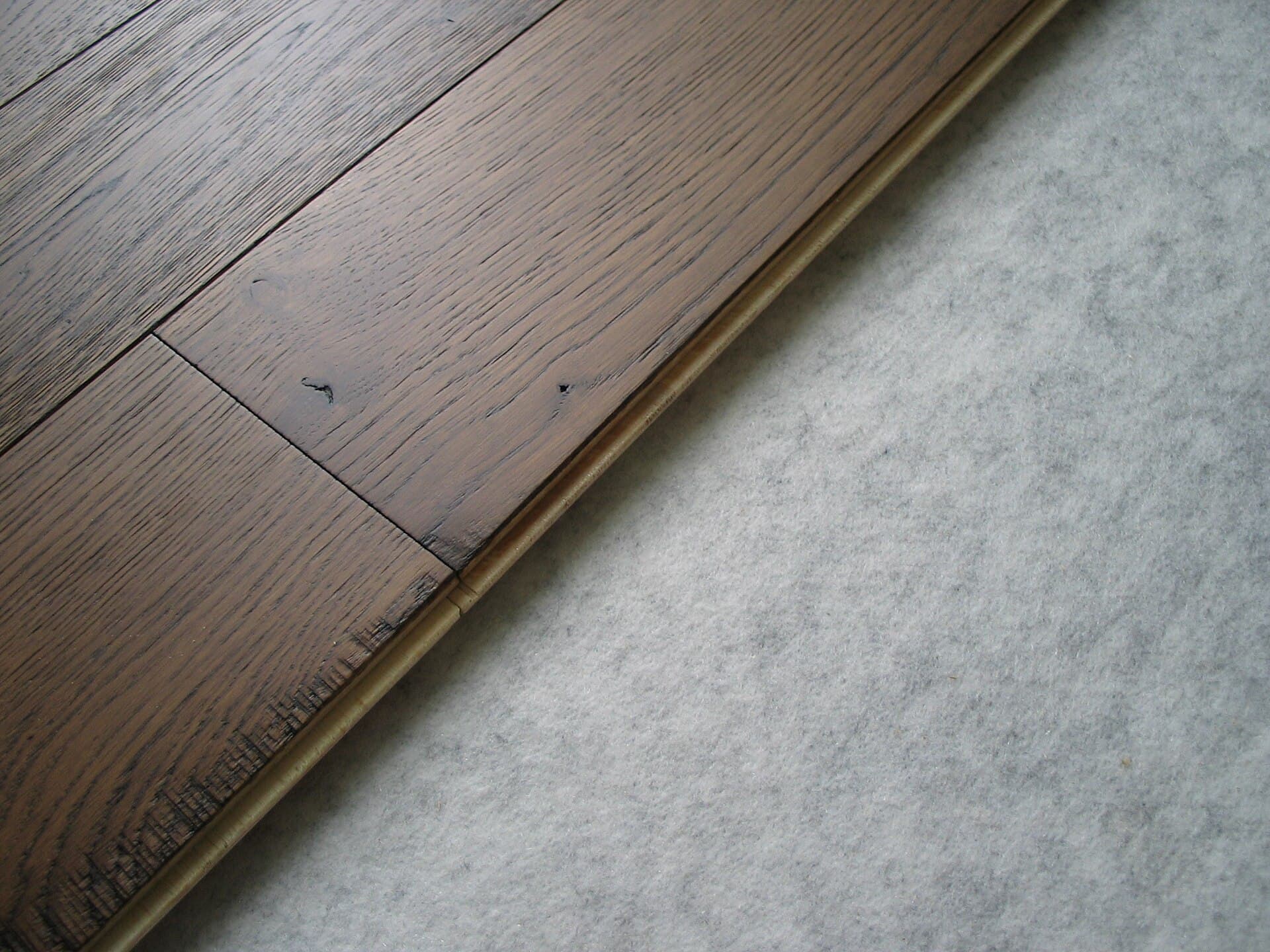
Photograph: Tongue of an engineered (contrecollé) parquet board, showing the layered core. by DocteurCosmos. Source on Wikimedia Commons, licensed CC BY-SA 3.0. See all image credits.

Timber floors collect three complaints more than any others: scratches you can feel with a sock, gaps you can see daylight through, and cupping that turns the board into a shallow tile. They are not the same illness. Treating all three with a sander is how you get a shiny, still-wrong floor.
This is the diagnostics page for the finishes hub. Coatings: oil versus polyurethane. Climate: coastal humidity.
Scratches: finish versus fibre
If you cannot catch a fingernail, you are looking at the coating. A recote or a local oil refresh may be enough. If the scratch is pale in a stained floor, you have gone through colour. If it is a gouge, you are in the timber.
Oiled floors are designed for local repair: clean, maybe a little denib, oil, blend. Films want more of a system recote or they flash. Prefinished engineered with a 0.6 mm photograph of oak does not have a local repair; it has a board swap if you kept spare, or a story you tell guests.
Prevention is cheaper: the habits in cleaning and pets.
Gaps: seasons versus failures
Australian summers open boards. That can be normal. A millimetre that comes and goes is not a lawsuit. A five millimetre canyon that grows every year, or a run of gaps on one side of the room, is movement plus a layout or moisture problem.
Do not fill summer gaps with a rigid caulk. You will crush it in winter and it will look like a diagram of regret. Traditional slivers, matching colour, are a craft. Cork in some old floors was a designed movement joint. In new wide-board jobs, excessive gapping often means the timber was too wet at install, the expansion gap was skipped, or the species is twitchy on a wide board — solid versus engineered.
Cupping and crowning: stop the sander
Cupping (edges high) usually means the bottom of the board is wetter than the top, or the top dried too fast. Wet slabs, wet crawl spaces, wet mopping, leaking doors. Crowning (middle high) can follow a sanded cup that then dried, or the reverse moisture gradient.
Do not sand cupping until the moisture source is dead and the boards have settled. A sander on a wet cup cuts the high edges off. When the board dries, you have a dish you cannot put back.
Find water: slab readings, subfloor, dishwasher, the shower next door, the garden bed against the weatherboard. Then wait longer than you want. Then decide if a full sand is still needed.
Engineered delamination — veneer lifting — is not cupping. It is often a wet-core or a glue failure. Board replacement is the honest talk.
When to replace a board
Splits through the face, broken tongues, a stove that was dragged, a dark pet stain that will not die. Secret-nailed solids can be let in by someone who has done it. Click engineered can be a row-out if the floor is floated; glue-down is more surgery. Keep leftover boards from the same batch, in the same climate as the house, not in a hot shed.
Matching colour after a repair
New timber is a different colour until UV catches up, which it may never do under a rug. Stains and white oils complicate this. Read matching new floors in a renovation if the repair is actually a new room.
A triage list
- Is it wet? Fix water first.
- Is it seasonal? Live with it or use a movement-aware fill.
- Is it the film? Recote.
- Is it the board? Repair or replace.
- Only then, sand.
Floorscapes would like fewer floors destroyed by premature grinding. Your sander would like that too; they would rather recote you in three years than explain a dish.
Pets, kids, and the difference between patina and damage
A scatter of fine claw marks in a hard gum floor is patina. A urine blackening at the door is damage. A toy-truck racetrack in a film finish is a recote. Teaching the household the difference will save you a sander. Pets is the longer animal brief.
Board replacement in a secret-nail floor is a craft: you cut, chisel, let in, colour. It will be visible for a year and less visible in five if the UV is even. In a floated click floor, replacing a centre board can mean unclicking a row from the wall, which is a furniture-out job. Glue-down engineered is surgery. This is why leftover boards in the cupboard are part of the original quote.
Crowning after a flood, then a too-early sand, is the saddest timber floor: a permanent washboard. Moisture meters, patience, and a finisher who will refuse to sand yet are the professional sequence. If they will not refuse, they are not the right crew.
There is no shame in a visible repair. There is shame in a glossy dish. Diagnose, then spend.
When to call an inspector, not a sander
If cupping is widespread and new, look for leaks, slab moisture, and crawl-space storms before you look for grit. If gaps open only on the west window path, you may be looking at UV and heat, not a bad mill. If one room moves and the next does not, find the wet wall between them. A building inspector or a timber floor specialist with a meter is cheaper than a premature grind. Repair is diagnosis with a budget.
Filler colour, winter work and the calendar of movement
If you must fill, do it when gaps are close to average, not at the driest week of a Perth summer. Colour the fill to the board, not to the photograph of the board. Shiny filler snakes are how amateur repairs advertise themselves. A floor sander can often recut and redo a bad fill as part of a recote. Budget that if a previous owner was enthusiastic with a caulking gun. Movement is a calendar. Work to it.
People also ask
- Why are my timber floorboards cupping?
- Usually moisture from below or from wet cleaning, making the edges swell relative to the centre. Fix the water, then wait, then sand if needed. Sanding a still-wet cupped floor makes a permanent dish.
- Should I fill gaps in floorboards?
- Only if the gaps are stable and you understand seasonal movement. Filling winter-tight floors that open every summer creates crumbling snakes of filler. Slivers, cork, or living with honest gaps are often better.
- Can deep scratches be repaired without sanding the whole room?
- On oiled floors, often yes, locally. On film finishes, a local repair can shine like a patch. Deep gouges may need a board replacement, especially in engineered product with a thin veneer.
Continue in the Finishes and care hub or read the Floorscapes editorial standards. Pitch a related essay on the write for us page.