How to clean and maintain timber floors in Australian houses
Mops, steam, sand, felt pads and the products that void a finish — a maintenance calendar that keeps boards alive between sands.
Elena Hart, Editor · 2026-04-15
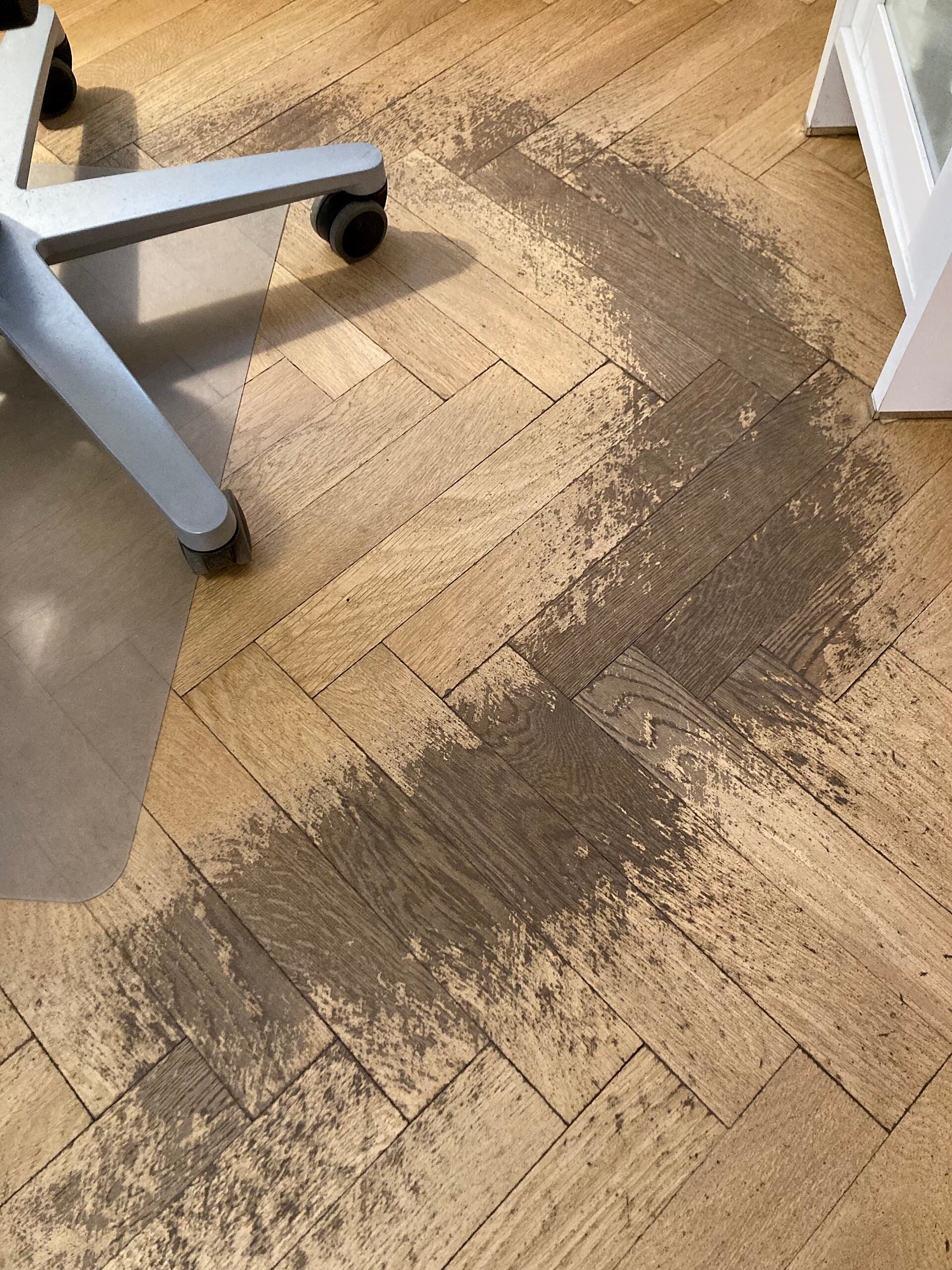
Photograph: Worn finish on historic oak herringbone parquet, showing traffic wear. by Kai Kemmann. Source on Wikimedia Commons, licensed CC BY-SA 4.0. See all image credits.

Timber floors die of grit and of kindness. Grit is sandpaper you forgot at the door. Kindness is a steam mop, a bucket of supermarket polish, and a weekly flood because the floor “looked dry”. Australian houses add beach sand, red dirt, and a UV that cooks finishes on the window path.
This is the habit essay. Coatings sit in oil versus polyurethane; repairs in scratches, gaps and cupping.
Dry dirt first
Vacuum with a hard-floor setting, or sweep. Grit left under socks is the enemy. Mats that actually grab sand — inside and out — do more than any oil. Coastal houses should treat the first two metres as a sacrificial zone; see coastal timber.
Robot vacuums with cliff sensors still carry grit in their wheels. Check the wheels.
Damp, not wet
A wrung microfibre mop, barely damp, with the cleaner the finish manufacturer put on the data sheet. No soaking. No steam. Steam is for tiles you trust, and even then not for every grout — sealing tiles.
Spills: wipe now, not at the end of dinner. Red wine on a pale oil is a timer.
Products that quietly ruin floors
- Oily “shine” mops that build a sticky film.
- Harsh alkaline strippers on a floor that only needed dusting.
- Vinegar, beloved of the internet, which can haze some films.
- Magic erasers used like a sander.
If the floor is under warranty, the wrong bottle is a claim-ender. Boring is professional.
Furniture, pets, chairs
Felt pads, replaced when they pick up grit (a dirty felt pad is sandpaper). Desk chairs want a mat even on hard timber; the wear photograph on this page is chair castors in another country and the same physics. Pets: the pet essay.
Rugs: use breathable underlays that do not dye or trap moisture. Move them occasionally or accept a UV map.
Seasonal movement is not dirt
Gaps in a Perth summer are not a cleaning failure. Peaking after a Brisbane storm is not a mop failure. Those are moisture. Do not fill summer gaps with a caulk you will hate in winter. Read repairs.
A calendar, not a mood
- Weekly: grit out, damp mop traffic paths if needed.
- Seasonal: wash mats, check pads, look at the kitchen pinch point in raking light.
- Every few years: recote paths before they go to timber. Book sanding only when a recote will not do.
Maintenance is how timber stays cheaper than replacing it with a photograph of timber. Floorscapes prefers the broom to the machine.
Red dirt, beach sand and the first two metres
Central and northern Australia add ochre that stains pale oils. Coastal houses add sand that is sandpaper. The first two metres inside the door should be thought of as a machine: a coarse outdoor mat, a finer indoor mat, and a floor finish you can recote. No mop will undo grit you walked to the kitchen.
Steam mops deserve a second no. The heat drives moisture into joins, can milk a film, and can leave a raised grain that then dirties faster. If a well-meaning relative bought you one, use it on the porcelain and hide it from the hallway.
Spills that dye — turmeric, red wine, dark sauces — are timers on oils and still timers on worn films. Keep a dry cloth in the kitchen, not as a lifestyle, as a tool. Felt pads die and become sandpaper; replace them when they go grey and sparkly.
If you have underfloor heating, cleaning water evaporates faster and can leave residue rings. Use less product, not more. If you have a west window, the UV path will look cleaner because it is actually more cooked; rotating rugs is conservation. Maintenance is a climate practice, like painting a verandah, not a once-off after the sander leaves.
Recoat signals, professional cleans and what not to DIY
When the kitchen pinch point goes pale or shiny in a different sheen to the field, you are in recote territory, not mop territory. A professional clean can remove greasy build-up that made you think the finish had died. That clean is cheaper than a sand. Ask a finisher to look before you book machines.
Do not mix oil soap onto a polyurethane, or polyurethane cleaner onto a hardwax oil, because a blog said “wood cleaner”. The wrong chemistry hazes. If you have lost the handover pack, a test in a wardrobe is still cheaper than a hallway experiment.
Move furniture with sliders that are clean. Dragging a sofa is a scratch with a story. Keep a packet of felts in the same drawer as batteries. Maintenance is boring on purpose. Boring is how boards reach year twenty.
Humidifiers, heaters and the winter house
Heating that dries the air will open gaps; that is not dirt. A pan of water on a wood heater is folk climate control; a humidifier with a number is better if you are serious. Do not wet-mop to “feed” the timber. Feeding is a myth that floods joins. If the house smells like the cleaner more than the timber, you are using too much product. Rinse the mop. Let paths dry before the dog returns. A timber floor that is maintained like a piece of furniture — gently, often, with the right bottle — will outlast a timber floor that is either ignored or loved to death with steam.
A note on commercial cleaners in a domestic hall
If you hire a cleaner, show them the finish type in writing. Many domestic cleaners default to a product that leaves a film. That film then dirties, then someone sands. Five minutes at handover saves a millimetre of timber. Put the allowed cleaner in the cupboard and the data sheet in a kitchen drawer. Timber maintenance is a chain of people. Write the chain down. Floorscapes would like fewer floors killed by kindness with the wrong bottle and more floors kept with a broom, a barely damp mop, and a recote booked while there is still finish to recote.
People also ask
- Can you steam mop timber floors?
- Almost always no. Steam drives water into joins and can haze or lift finishes. A barely damp microfibre mop is the usual adult tool.
- What is the best cleaner for timber floors?
- The one the coating manufacturer names, pH-sensible, without oily build-up. ‘Wood soap’ that leaves a greasy film becomes a dirt magnet. Water with a specified cleaner beats supermarket mystery liquid.
- How do I stop scratches on timber floors?
- Felt pads, no grit at the door, trimmed pet nails, and rugs at the pinch points. You cannot polish grit away; you grind it in.
Continue in the Finishes and care hub or read the Floorscapes editorial standards. Pitch a related essay on the write for us page.