Sealing tiles and grout in Australian wet areas and kitchens
When porcelain does not need a sealer, when stone and grout do, and how kitchens and showers actually stain.
Priya Nair, Tiles and wet-area editor · 2026-07-02
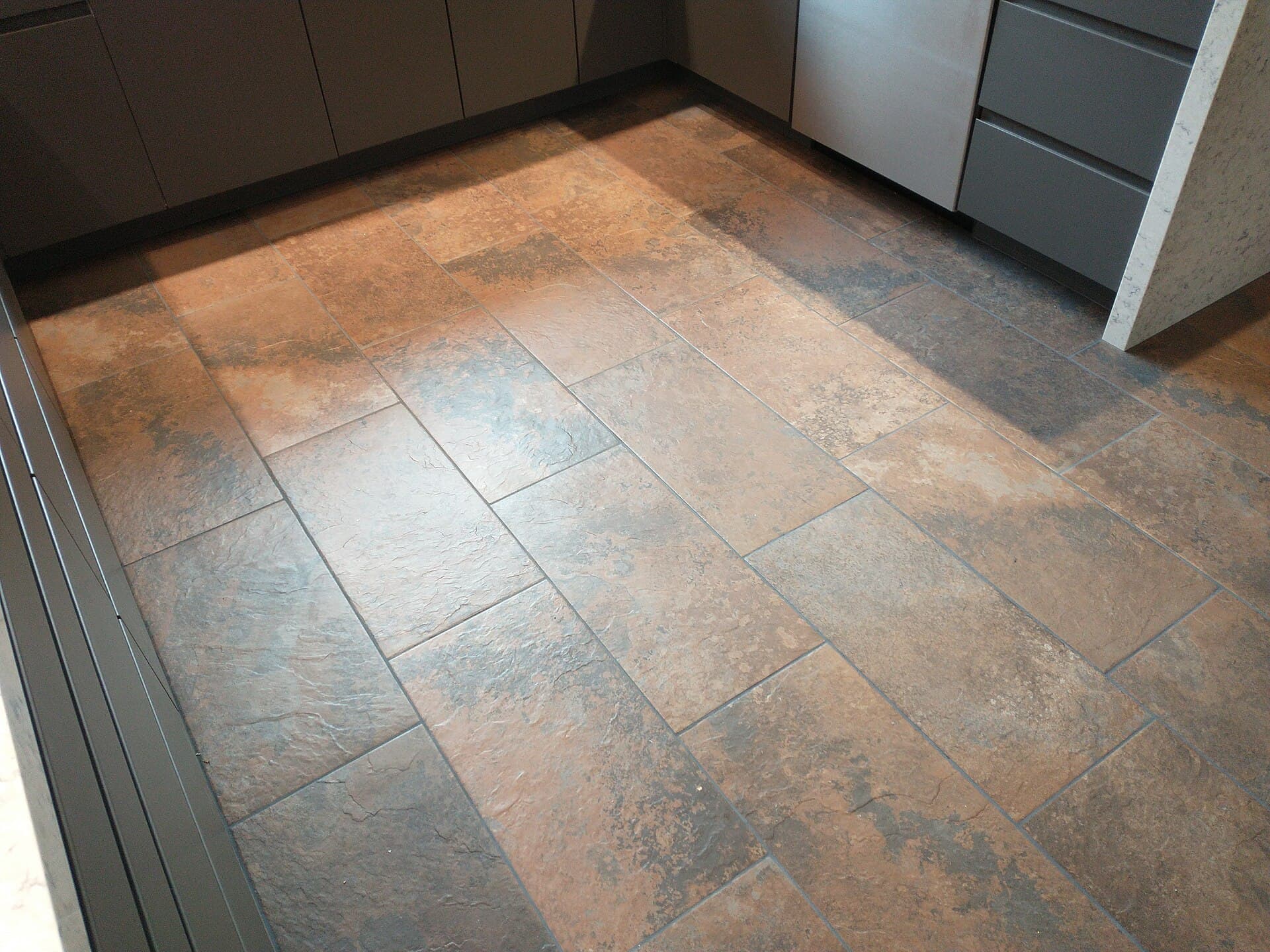
Photograph: Patterned ceramic tiles on a kitchen floor. by Stilfehler. Source on Wikimedia Commons, licensed CC BY-SA 4.0. See all image credits.

Tile faces get the glory. Grout gets the curry, the conditioner, and the red dirt from the back step. Sealing is one of those jobs people either never do or do with a bottle that turns the floor into a skating rink. Australian wet areas and family kitchens are where the distinction matters.
This sits with bathroom tiles and kitchen flooring. It is not a substitute for a membrane.
Tile body first
Glazed porcelain: usually do not seal the face. You are wasting product and can hurt slip. Honed natural stone: usually do seal, with a penetrating sealer that does not sit as a plastic skin. Terracotta: a tradition of sealing and waxing, and a maintenance personality. Concrete-looks: check whether they are porcelain or actually absorbent.
If the data sheet is silent, ask the merchant for the absorption group. Our porcelain versus ceramic essay is the longer version.
Grout is the sponge (unless it isn’t)
Cement-based grout is porous. In a shower it takes soap. In a kitchen it takes oil. A penetrating grout sealer can slow that down. It will not stop dirt forever and it will not rescue a white grout in a turmeric kitchen.
Application: clean grout first or you will seal dirt in. Let it cure as specified after grouting before you seal. Wipe tile faces so you do not leave a haze that becomes a slip story.
Epoxy grout is a different contract: less staining, harder to install, ugly if botched, excellent in many commercial and serious domestic wet rooms. You do not “seal epoxy” like cement. You clean it as the system allows.
Showers
Sealer is not waterproofing. If the shower leaks, AS 3740 is the conversation, not a bottle. Sealer is about the grout looking less tragic at year three.
Acidic cleaners destroy cement grout and some stones. If you sealed on Sunday and descale with something nuclear on Monday, you did a circle.
Kitchens and entries
Oil, tannin from eucalyptus leaves, and sandy grout lines. Darker grout colours are a specification, not a failure of nerve. If you insist on pale grout, accept a sealer calendar and a brush.
Outdoor grout sees UV and movement — alfresco. Some sealers go glossy and lethal when wet. If you cannot keep a P rating, you chose the wrong product.
Slip, always
Any topical coating that raises gloss can drop slip resistance. In wet rooms that is a safety specification, not an aesthetic. Keep topical shine off bathroom floors.
A short program
- Identify body (porcelain, ceramic, stone, terracotta).
- Identify grout (cement, epoxy, other).
- Seal only what the manufacturer wants sealed.
- Clean with chemistry that does not undo it.
- Recoat grout sealer when water stops beading, not when a calendar app nags blindly.
The most beautiful tile job on Floorscapes still has grout. Treat the grid as part of the floor, not as a regrettable outline.
Test patches, haze and the afternoon you will hate
Always test a sealer on a leftover tile and a strip of grout you can live with being wrong. Some sealers darken grout. Some leave a topical sheen that drops the slip rating in a shower — a safety failure, not a taste failure. If water no longer beads after a year, clean then reseal; do not layer sealer on soap scum.
Haze on porcelain from leftover sealer is a special misery. Wipe as you go with the cloth the manufacturer named. If you wake up to a cloudy bathroom floor, stop walking on it and call the installer before you invent a chemistry.
Outdoor grout sealers that go glossy are skating rinks after rain. If you cannot find a matt, penetrating product that keeps the P rating, skip topical treatments and choose a grout colour that hides life.
New builds often get sealed too early, before grout has cured, trapping moisture. Follow the grout’s clock, not the handover calendar. The membrane under the tile is still the waterproofing. Sealer is cosmetics and stain delay for the grid. Keep those jobs in the right order.
Rentals, cleaners and the product in the cupboard
If cleaners rotate, write the grout type and the allowed chemistry on a card in the kitchen. A rental with epoxy grout and a tenant with bleach is still a better story than cement grout and a tenant with bleach. Provide the right bottle. Sealing is a system with people in it, not only a liquid.
Steam, oils and the kitchen grid
Kitchen grout takes oil. A sealer slows it; a darker grout hides it; epoxy laughs at it if installed well. Steam mops drive oil and moisture further in. If you must steam, know you are shortening the sealer cycle. Better: a wrung mop and a grout brush on the splash zone monthly. The grid is a surface. Clean it like one.
After renovation dust and the first clean
Grout sealed before the last of the plaster dust is gone will seal the dust. Do the builder’s clean, then the grout clean, then the sealer. Handover week is not a sealer week if the house is still white with dust. Write that sequence into the cleaning quote. Wet-area grout that starts dirty never quite looks like the sample. Sequence is the sealer.
Showers used twice a day and the recote of the grid
A family shower is a chemical plant. Sealer cycles shorten. If beading dies in six months, clean and reseal; do not wait for black grout as a calendar. If you hate that cycle, pay for epoxy grout at install. The grid will still need cleaning, but it will not drink conditioner quite so eagerly. Wet-area grout is a maintenance surface. Budget it like paint on a verandah, not like a tile you never touch.
One last distinction
Face sealers on dense porcelain are usually a waste and can be a slip hazard. Grout sealers on cement grout are often worth the afternoon. Stone sealers are a different product again. Read the body, then the bottle, then the room. That order keeps Australian wet areas both prettier and safer.
People also ask
- Do porcelain tiles need sealing?
- Most glazed or through-body porcelains used on floors do not absorb like stone and are not sealed on the face. Grout often still does. Always follow the tile data sheet; some honed or structured stones-looks are different products.
- How often should I seal grout?
- If you used a cement grout that the manufacturer wants sealed, expect to refresh in wet rooms on a cycle of one to two years depending on cleaners. Epoxy grout is a different system and is not ‘sealed’ the same way.
- Is epoxy grout better in showers?
- It is less absorbent and often easier to keep looking decent, if it is installed by someone who can actually finish it. It is unforgiving of sloppy work and is not a fix for a missing membrane.
Continue in the Finishes and care hub or read the Floorscapes editorial standards. Pitch a related essay on the write for us page.