Oil vs polyurethane timber floor finishes
Hardwax oils, penetrating oils and film polyurethanes compared for Australian UV, kitchens, recoating and the way a floor should age.
Marcus Bell, Timber editor · 2026-03-25
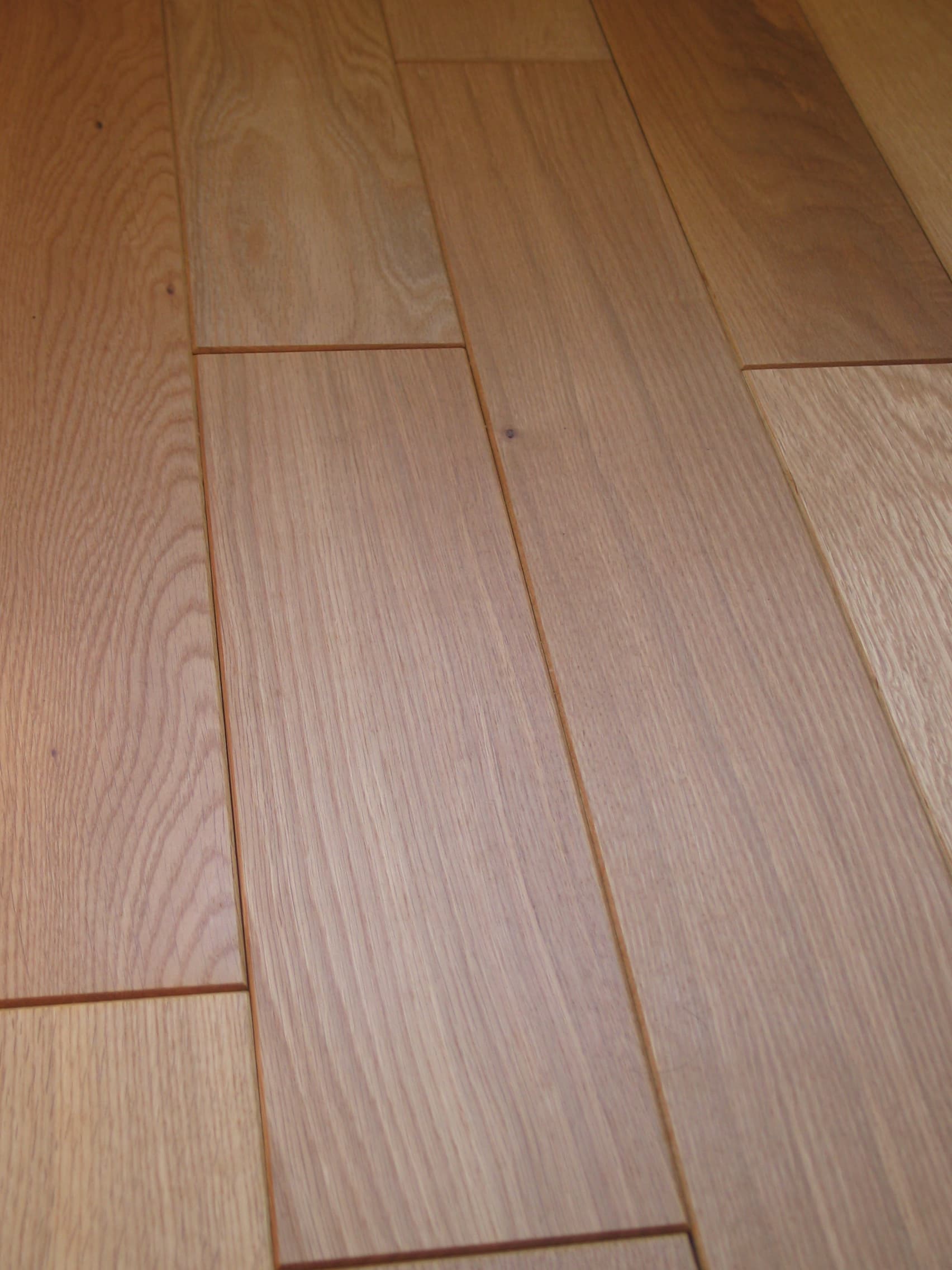
Photograph: Solid oak floorboards with a chamfered edge and rustic grade. by DocteurCosmos. Source on Wikimedia Commons, licensed CC BY 3.0. See all image credits.

A timber floor is only as honest as its last coat. The board can be Blackbutt or Jarrah; the thing you mop is a finish. Australian practice still splits, roughly, into films (polyurethane and cousins) and oils (penetrating oils and hardwax oils). The internet turns this into a morality play. It is a maintenance play.
Pair this with sanding and polishing and cleaning.
What a film does
Polyurethane sits on top. It is a wear layer you can see. While it is intact, stains sit on the film, water beads, and the timber is somewhat armoured. When it wears through in a kitchen pinch point, you have a raw patch in a shiny field — the recote-or-sand decision.
Water-based polyurethanes have made the old amber solvent look optional. They still need skill: too thin, and they fail; too rushed, and they haze. Sheen from dead matte to piano gloss changes how Australian light reads the grain.
Films are often the right call in rental-grade family rooms where nobody will maintain an oil, and in some commercial timber that still exists — though many workplaces have moved to vinyl and epoxy.
What an oil does
Penetrating oils go into the surface; hardwax oils sit in a thin, repairable layer that still feels like timber. Scratches can often be blended locally. Water left overnight can still mark. Kitchens need discipline. Pale white oils in a family house are a hobby; they are also beautiful if you are the person who will maintain them.
Oils love Australian design culture right now because they photograph as “natural”. Natural is not naked. An unfinished floor in a Sydney summer is a staining device.
UV still changes the timber under both systems. Oils do not freeze a eucalypt in time. Rugs will still map.
Recoating, which is the real difference
Films want a screen and a full-room recote when the paths go. Oils want more frequent, smaller attention — a kitchen refresh without grinding the bedrooms. If you will not maintain either, the film often looks tidier for longer, then fails more dramatically.
Mixing systems is how floors go milky. If the history of the floor is unknown, a professional test patch beats a product you liked on a podcast.
Kitchens, pets, kids
- Heavy family, unknown cleaners: a good water-based film, matte, and felt pads.
- Owner-occupier who likes timber as timber: hardwax oil, mid colour, recote calendar.
- Dogs: either, plus the habits in floors for pets.
- Coastal sand: a system you can recote without drama.
Site-finished versus prefinished
Prefinished engineered boards arrive with a factory UV-cured film that is often tougher than a site-applied weekend poly. You cannot easily change your mind. Site finishing lets you colour to the light in the room and to blend repairs. It also means days of smell and socks.
A decision sentence
If you want a floor you patch with a cloth, oil. If you want a floor you leave alone until a recote weekend, film. If you want a floor you never think about, you wanted hybrid, not timber.
Floorscapes will not pick a brand for you. We will pick against the idea that any coating is a personality.
Hardwax brands, maintenance oils and the supermarket trap
Hardwax oil is a family, not a single potion. Some systems want a specified soap forever; some are more tolerant. Using a supermarket “wood floor shine” on a named oil is how you build a greasy haze that then needs a professional clean. Put the right bottle under the sink on handover day.
Spot repair is the oil party trick: a kitchen chair path can be denibbed and oiled without coating the bedrooms. It only works if the original system is documented. If you do not know what is on the floor, a test patch in a wardrobe beats a whole-house experiment.
Commercial timber in cafés often uses tougher film systems because the mop is chemical and the chairs are weapons. If your house is a café, be honest. If your house is a library with socks, oil can be a joy.
White pigments in oil sit in the grain and then wear off on the traffic path, leaving a two-tone floor that some people like as patina and some people experience as dirt. Sample a trafficked test if you can. There is no shame in a mid honey film that still looks like one floor at year five.
Kids’ craft, pets’ accidents and the chemistry spill
PVA glue, nail polish remover, and pet urine are the three household chemicals that find finishes. Films often give you time to wipe. Oils can mark faster and repair faster. If your house is a craft studio, a film may be kindness. If your house is a sock library, oil may be joy. Pets sit in the middle: wipe fast, recote the path, do not pretend any finish is a nappy.
There is no trophy for suffering a high-maintenance finish you will not maintain. Choose the system whose calendar you will keep. That is the whole argument, dressed in chemistry.
Sheen maps and the path that always wears first
Whatever you choose, the path from kettle to table will wear first. Matte films go satin there. Oils go paler or darker depending on dirt. That map is not failure; it is a recote signal. If a perfectly even sheen at year seven matters more than repairability, you may still want a film and a recote of the whole plane. If you like a floor that shows life and can be touched up, oil. Walk your own kettle path and decide.
Builders’ specs versus the house you will occupy
Project homes often default to a prefinished film because handover is a date. That can be a perfectly good floor. If you are owner-building a house you will oil on weekends for a decade, say so in the specification so the builder does not poly your dream. Finishes are occupancy. Write occupancy into the spec. The best coating is the one whose maintenance matches the household that will actually mop the kettle path in socks.
People also ask
- Is oil better than polyurethane on timber floors?
- Oil is more repairable in patches and often looks more like timber. Polyurethane is a tougher film for some family traffic and some commercial rooms. Neither is maintenance-free. Choose the ageing and the recote method you will actually do.
- Does polyurethane yellow?
- Solvent-based oils of the old school yellow more. Water-based polyurethanes yellow less. All films change a little in Australian UV. Sample in the room.
- Can you put polyurethane over an oiled floor?
- Sometimes, after the right preparation; often it is a bad idea. The two systems do not like to be mixed casually. Ask a finisher, not a forum.
Continue in the Finishes and care hub or read the Floorscapes editorial standards. Pitch a related essay on the write for us page.