Hybrid vs laminate vs vinyl plank: which timber-look floor for Australian homes
SPC hybrid, laminate and LVP compared on water, dents, acoustics, cost and the rooms where each one actually belongs.
Elena Hart, Editor · 2026-02-04
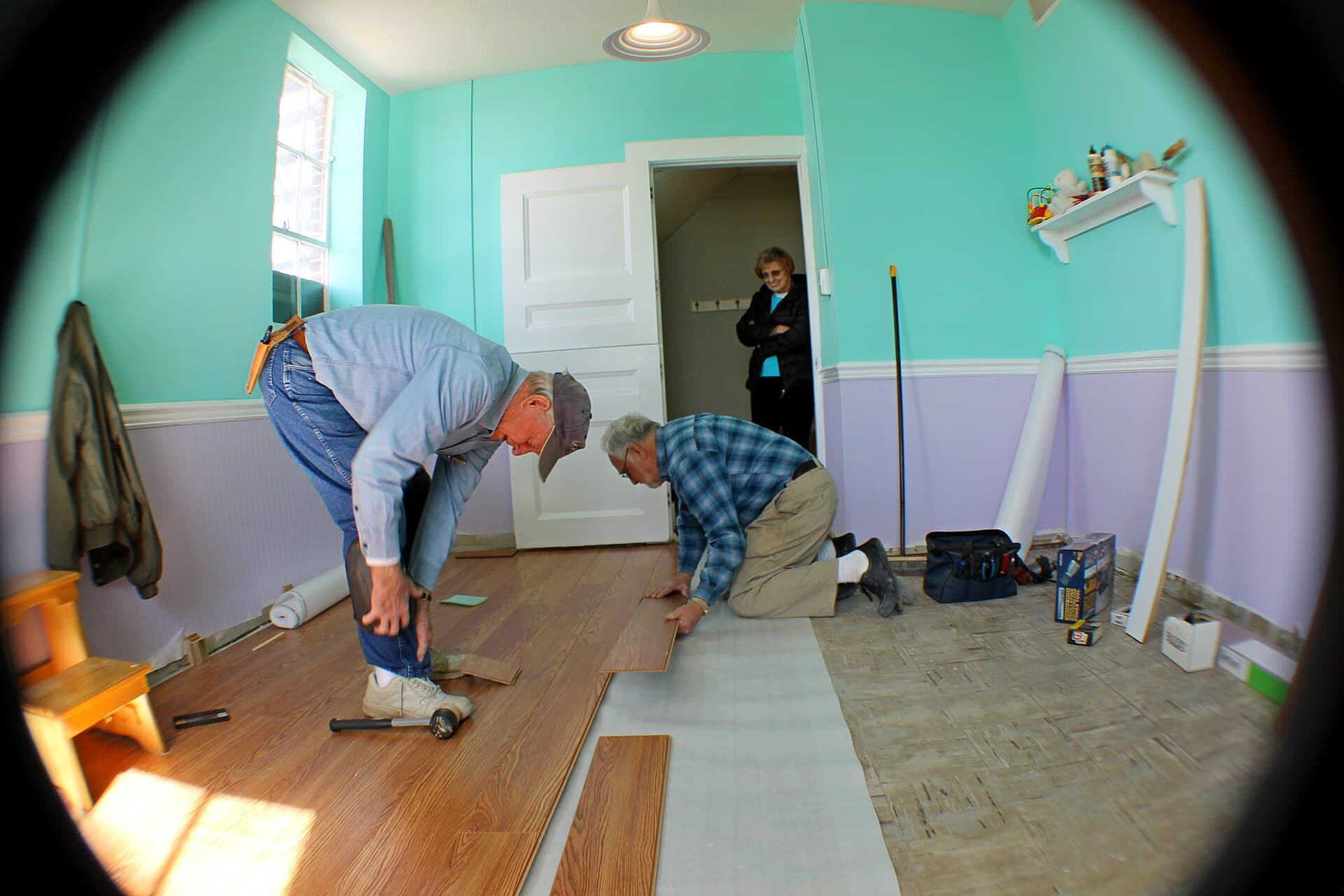
Photograph: Click-lock laminate flooring being assembled. by Wasrts. Source on Wikimedia Commons, licensed CC BY-SA 4.0. See all image credits.

The timber-look aisle is three products wearing the same photograph. Laminate is a photographic wear layer on a fibreboard core. Vinyl plank (LVP/LVT) is a flexible or semi-rigid PVC product. Hybrid, in current Australian speech, usually means a rigid SPC or similar stone-polymer core with a vinyl wear layer and a click profile, often with an attached acoustic pad. They are not “all the same floating floor”. They fail differently.
This comparison is the front door to the vinyl, laminate and hybrid hub. Wet-area honesty continues in hybrid flooring in wet areas. Pets get their own argument.
Construction, in sentences rather than infographics
Laminate: a melamine photograph glued to HDF, with a balancing paper on the back. It can look startlingly like timber, including the bevel. Its enemy is water in the core. Swell the HDF and the joint is gone. AC wear ratings (AC4, AC5) describe surface abrasion, not a flood.
Vinyl plank: vinyl through the wearing bits, sometimes with a foam backing, sometimes rigid. Glue-down LVT can be a beautiful, quiet, wet-tolerant floor in the right room. Cheap loose-lay can telegraph every ridge in the slab. Dents from fridge feet are the folklore because they are true.
Hybrid/SPC: a rigid core that does not swell like HDF, a vinyl photograph on top, a click like laminate. The rigidity helps with dent resistance and with laying over slightly imperfect floors (slightly — see subfloor prep). The attached pad is acoustic marketing that sometimes works and sometimes makes a spongy lock.
Water, which is the Australian question
Kitchens spill. Sliding doors leak. Dogs. If the room is dry-bedroom-only, laminate is still a rational, cheaper, often better-looking print. If the room is a kitchen, entry, or the one the esky crosses, hybrid or a good vinyl is the less superstitious choice.
None of these is automatically a shower. Waterproof wear layers do not make a wet-area system. That argument is the wet-area essay and, for real wet rooms, bathroom tiles.
Dents, scratches, sun and the rest of family life
SPC’s pitch is that the core does not squash like foam-backed vinyl. True, until you drop a jack stand. Laminate’s surface can be very scratch-tough and still explode at a wet edge. Vinyl’s softness is kinder underfoot and meaner under stiletto furniture.
UV: cheap prints fade in a west window. Ask about warranties that mention sunlight, then still use a curtain like an adult. The fading path will not match the timber light essay because these are plastics and papers, not lignin, but the geometry of Australian sun is the same.
Acoustics and apartments
Click floors drum. Pads, underlays, and glue-down vinyl are the three answers. Strata reports often name a weighted reduction you must hit. A $35 attached pad that smells like a gym does not automatically hit it. Glue-down LVT on a prepared slab is still the quiet professional in many apartments.
Cost bands, 2026, with the usual caveats
Installed typical ranges we see quoted nationally:
- Vinyl plank: about $48–$85/m²
- Laminate: about $50–$95/m²
- Hybrid SPC: about $59–$90/m², sometimes more for fancier wear layers
A 100–130 m² project home can still land in the $5,000–$10,000 conversation for these products if the slab is kind. It will not if you are pulling old tiles, flattening a dish, or paying inner-city access. Compare with timber costs if you are still pretending hybrid is “the same as oak”.
Rooms, quickly
- Bedrooms, dry: laminate or hybrid.
- Open kitchen-living: hybrid or glue-down vinyl.
- Rentals: see vinyl for investment properties.
- Laundry/bathroom: tile or certified sheet, not a hopeful click system.
- Home office chair: a mat, or accept the wear pattern our parquet-wear photograph shows in timber — plastics wear too.
The sentence to take to the showroom
Tell them the room’s water, sun, acoustic, and dent story before you tell them the colour. The photograph on the board is the least true thing in the aisle. Construction is the rest.
Wear layers, bevels and the photograph quality
Wear layer thickness on vinyl and hybrid is a millimetre conversation that salespeople skip. A 0.3 mm wear layer in a family hall is a short story. A 0.5–0.7 mm layer is the usual serious domestic conversation. Commercial wear layers go higher and look less like a Scandinavian cabin, which may be the point in a rental.
Bevels make a floating floor read as planks. A square edge can look more like a sheet, which hides the click and also shows every proud lock. Embossed-in-register textures that follow the photograph are nicer under a hand than a generic orange-peel. None of this matters if the core is wrong for the room.
Underfloor heating compatibility is range-specific — see underfloor heating. Some SPC cores tolerate a capped surface temperature; some pads insulate so well the system cannot heat the room. Glue-down LVT is often the more predictable resilient over electric mats.
DIY is real for rectangular rooms with a flat slab and a patient person. Kitchens with many doorways, stairs, and a dishwasher nick are how DIY becomes a weekend that never ends. Click profiles vary; a cheap lock that you have to tap until it peens is a future opener. If the sample lock feels mushy, the floor will feel mushy.
The timber-look aisle is a construction aisle. Walk it with water, sun, acoustics and dents in your mouth, and only then with a colour. The photograph is the bait. The core is the fish.
Stairs, wet edges and the mixed-house reality
Stairs in these products are often a different SKU: a nosing, a colour match that is not quite, a noise. Budget them. Wet edges at laundries still want a break to tile. A whole-house hybrid including the shower is how this comparison essay would fail its own exam.
If you are choosing among the three for a single living plane, hybrid is the current Australian default for family water, laminate for dry budget bedrooms, vinyl plank for quiet glue-down units. Exceptions are allowed if you can say why. The aisle will try to stop you saying why. Resist.
People also ask
- Is hybrid flooring better than laminate?
- For most Australian family rooms that see spills, yes: a rigid SPC hybrid is more water-tolerant and often more dent-resistant. Laminate can still be the better buy in a dry, climate-controlled space if you want the sharpest timber print per dollar.
- Is vinyl plank waterproof?
- The vinyl itself does not drink water the way a fibreboard core does. Joints, edges and the subfloor still can. Waterproof is not the same as bathroom-approved.
- What does hybrid flooring cost installed in Australia?
- Typical 2026 installed bands sit around $59–$90/m² for hybrid, $50–$95 for laminate and $48–$85 for vinyl plank, before ugly extras like removal and levelling.
Continue in the Vinyl, laminate and hybrid hub or read the Floorscapes editorial standards. Pitch a related essay on the write for us page.