Choosing floor colours for Australian light
North light, west sun, grey winters and the way a sample board lies — how to pick a floor colour that still works at 4 pm in January.
Elena Hart, Editor · 2026-01-28
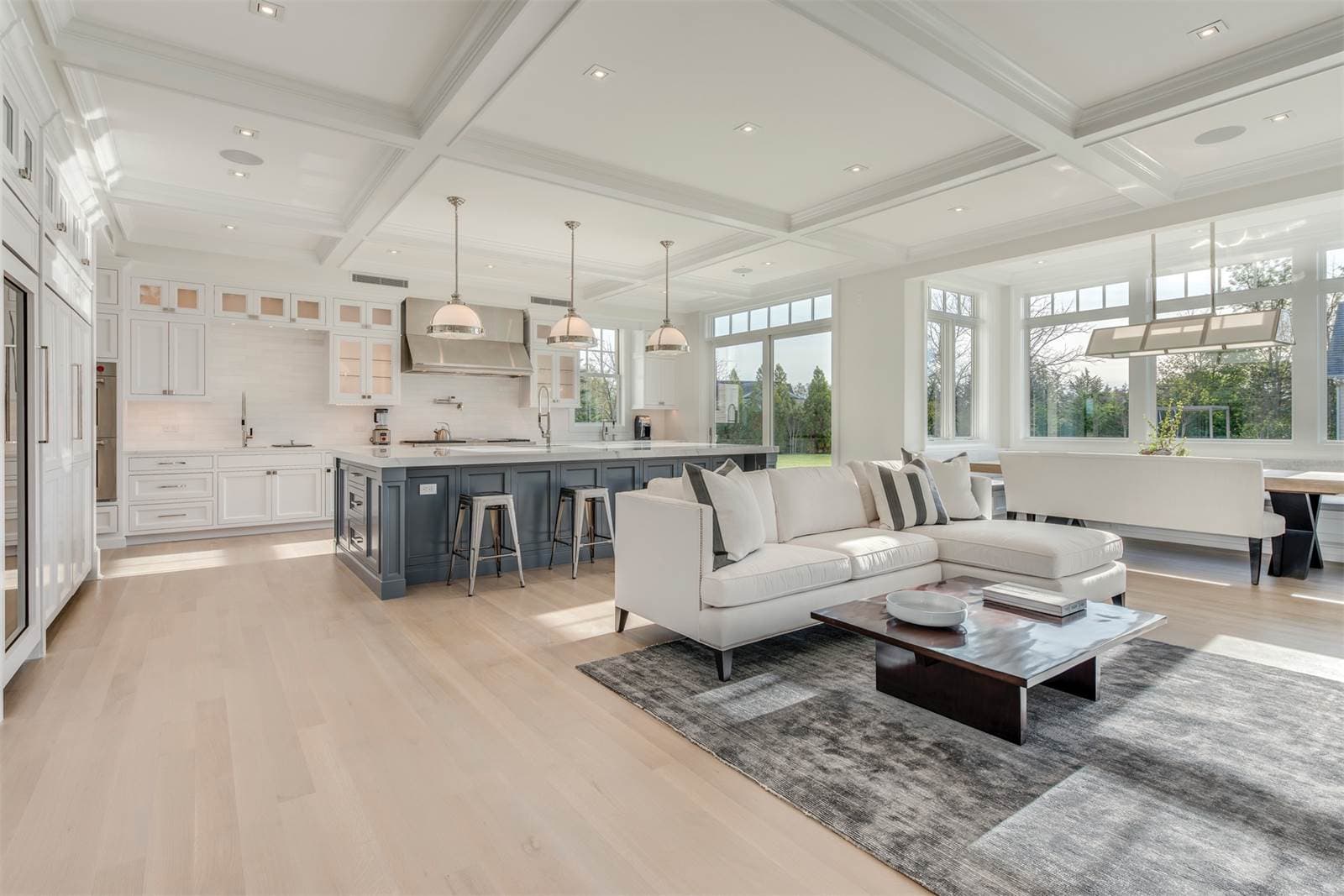
Photograph: Kitchen interior with timber-look flooring and pale cabinetry. by JessofWoodnCo. Source on Wikimedia Commons, licensed CC BY-SA 4.0. See all image credits.

Australian light is not a filter you add in an app. It is a directional, seasonal, slightly brutal lighting designer that works for free and never asks. A floor that looked “greige and calm” under a showroom’s 4000 K LEDs will go apricot at 4 pm in a west-facing Adelaide living room, and mouse-brown in a south-facing Melbourne winter.
This is a design essay that still has physics in it. Species colour is also in the hardwood guide. Pattern and noise are in herringbone.
Orientation before pigment
- North: generous, warm, bleaching. Dark floors can cook the room; pale floors can glare. Mid, slightly muted tones often survive.
- West: the interrogation lamp. Anything red in the timber will perform. Anything grey will fight the sun and lose, looking muddy.
- East: kinder mornings, calmer afternoons. Good for cooler species if you want them to stay cool.
- South: in much of the country, the grey room. Warm timber here can be a gift. Cool grey floors can die.
Apartments with a single aspect are not “all four”. They are one. Specify that one.
The sample-board problem
A 200 mm stick is a postcard. Borrow a square metre. Put it on the actual substrate, not on the showroom rug. Look at 8 am, noon, 4 pm, and after the lights are on. If the merchant will not lend, buy a box you can return or use in a wardrobe.
Photographs on phones add their own white balance. Do not choose a floor from Instagram, including ours, without a physical sample. Our images are credited on image credits and they were not taken in your lounge.
Undertones: pink, green, yellow, grey
Blackbutt leans honey-pink. Jarrah leans red. Spotted Gum can do everything in one board. European oak can be smoked into brown or washed into grey. Hybrid prints can fake all of this, then fade in a UV path that does not match the unfaded furniture.
Walls matter. A cool white will make honey timber look orange. A warm white will make grey oak look dirty. Take the wall sample to the floor sample, not your memory of both.
Sheen is colour
Gloss bounces the window around the room and reads lighter. Matte swallows light and reads darker, more honest. The same stain in two sheens is two colours. Finish systems change this over time as they wear to satin in paths — our worn parquet cover is a colour diagram as much as a damage diagram.
Open plans and the one-floor fantasy
One floor through a whole plan is a lighting problem as well as a material problem. The north living room and the south bedroom will not match even if the batch does. Either accept the shift as the house turning, or change material at a threshold that already exists.
Fashions that forgot the sun
Washed grey oak; high-contrast smoked herringbone in small rooms; near-black engineered in west-facing boxes; whitewashed boards in sandy coastal houses that then went cream-yellow. Fashion is allowed. It still has to sit in a latitude.
A working method
- Name the aspect and the glazing (eaves? no eaves?).
- Shortlist two undertones, not twelve colours.
- Live with a large sample for a week.
- Only then pick the construction — timber, tile, hybrid — that can wear that colour honestly.
Floorscapes will keep arguing that colour is climate. If that sounds too earnest, look at your hallway at 4 pm and tell us the sample board was right.
Lamps, LEDs and the night floor
The floor has two lives: daylight and the lights you actually installed. Warm 2700 K lamps will pull honey out of Blackbutt and mud out of a cool grey oak. Cool 4000 K downlights can make Jarrah look like a steak. If you have already chosen lamps, sample the floor under them at night as well as at 4 pm.
Open shelves, art, and joinery colours bounce. A strong terracotta rug will pink a pale floor. A forest-green sofa will cool it. The floor is not an island. Take a photograph in RAW if you must, but trust your eyes in the room more than the phone, which will “correct” the orange west sun into a lie.
Display homes are theatre: huge windows, no furniture against the glass, staging lamps, and a floor that was oiled yesterday. Your eaves, your flyscreens, your neighbour’s two-storey wall are the real lighting plot. Steal ideas, not colours, from display villages.
If you are colour-uncertain, mid-warm and matte is the Australian coward’s excellent choice. You can always add a rug. You cannot easily un-grey a west-facing box. Cowardice in floor colour is often wisdom.
Coast, bush and suburban glare
Coastal light is full of bounce from water and sand; pale floors can go nuclear, dark floors can go hot. Bush blocks with deep eaves make south rooms cave-like; a warm timber there is a lamp you do not have to switch on. Suburban west walls with no eaves are the cruel case: sample at 4 pm or do not bother sampling.
Paint undertones on walls will fight or help. Take the floor sample to the paint deck, not your memory. If you are colour-blind to undertones, bring a friend who is rude. A floor is a large decision. It deserves a second pair of eyes and a week, not a Saturday impulse.
Photographs for trades, not for likes
When you have chosen, photograph the sample on the floor at 4 pm and send that to the painter and the cabinetmaker. Do not send a showroom shot. Trades match to what you send. If you send a lie, you will live in a lie. Floorscapes would rather you chose a slightly boring mid oak that works at every hour than a hero grey that works at 11 am in June and at no other time.
Sample boards versus furniture you already own
Bring the sofa arm, the timber table, the existing skirting chip to the showroom. A floor that “goes with everything” often goes with nothing you actually have. If the table is red-brown Jarrah, a cool grey hybrid will argue every dinner. If the sofa is oatmeal, a wild Spotted Gum may be the energy the room needs or the energy it cannot take. Light decides the undertone; furniture decides the tolerance. Make them sit in the same sentence before you pay a deposit.
People also ask
- Should I choose a light or dark floor in Australia?
- Neither is correct. North and west rooms heat and bleach dark floors and glare on pale ones. South-facing Melbourne rooms cool everything toward grey-brown. Sample in the room, at several hours, on a large board.
- Why does my timber floor look orange?
- Many eucalypts have a pink or honey cast that showroom LEDs hide. UV then adds more colour. If you wanted a cool European oak, you may have bought Blackbutt under a warm downlight.
- Do grey floors still work?
- Cool grey washes can look dead in Australian yellow afternoon light, or beautiful in a south room with the right walls. The 2018 grey-everywhere look dated because it was used without regard to orientation.
Continue in the Rooms and Australian houses hub or read the Floorscapes editorial standards. Pitch a related essay on the write for us page.