Vinyl flooring for Australian rentals and investment properties
What actually lasts between tenancies: glue-down LVT, sheet vinyl, click hybrid, and the kitchens that destroy pale timber prints.
Tom Weller, Commercial editor · 2026-06-04
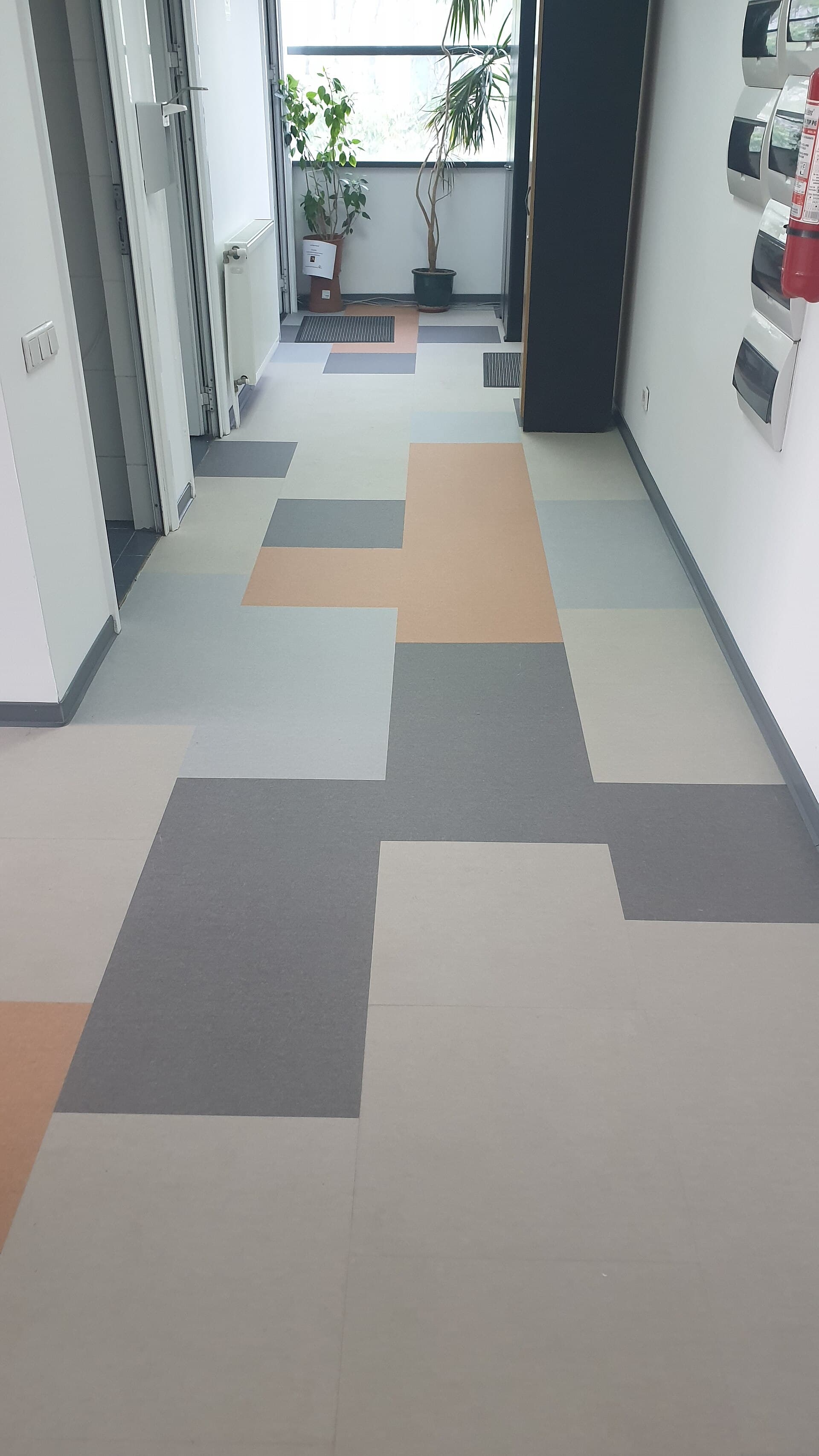
Photograph: Installed vinyl floor tiles in mixed colours. by Linoleum123. Source on Wikimedia Commons, licensed CC BY-SA 4.0. See all image credits.

Investment floors are not holiday houses in a catalogue. They are surfaces that must survive unknown furniture, unknown cleaning products, and a fridge that will leak on a Tuesday you are not told about. The brief is: mopable, replaceable in parts if possible, not so pale it shows every tomato, not so dark it shows every dust snake, and legal at the wet-area line.
This is the landlord companion to hybrid versus vinyl versus laminate and to pets, because many tenants have them.
Glue-down LVT: still the quiet professional
A well-prepared slab and a glue-down plank or tile vinyl is hard to beat in units: acoustic, thin, difficult to wreck at the edges, and repairable by replacing a plank if you kept stock. It wants flatness. It does not want a steam mop cult.
Sheet vinyl, welded and coved, remains the right answer in some laundries, bathrooms, and the kind of kitchen that will never see a designer. It is how Australian hospitals think. That is a compliment.
Click hybrid: the current default, with caveats
SPC hybrid is what most renovating investors now fit because it is fast and water-tolerant in living areas. Specify a wear layer that is not a joke, a colour that is neither cream nor night, and a lock the installer actually understands. Keep a box of planks in the shed for the day a removalist gouges the hallway.
Click floors still fail when the dishwasher floods for a weekend, when the pad drinks pet urine, and when expansion was siliconed shut. They are not a bathroom. Wet-area hybrid is the longer warning.
Laminate: cheaper, wetter, sadder
Laminate looks sharp on day one in a dry bedroom. In a rental kitchen it is a countdown. If the rent is low and the rooms are dry, maybe. If you are competing in a family suburb, spend the extra on hybrid or LVT and photograph a floor that still exists at inspection three.
Wet rooms: stop being creative
Bathrooms and laundries: tile with a real membrane, or coved sheet. Not leftover hybrid. Not carpet tiles from the office. The NCC does not care that the property is an investment. Neither will the tribunal if someone slips on a polished bargain tile — read slip ratings.
Colour, pattern, and the inspection video
Mid oak prints hide crumbs and still look like a home. Grey washed oak dated itself; it also shows every sandy footprint. Busy terrazzo-look vinyl can hide stains and look like a cafe. Plain dark floors show dust and despair.
Avoid high gloss. Avoid white grout in the rental kitchen if you tile. Avoid anything that requires a specialist oil and a poet to maintain — timber is a gift to a house you love, not always to a house you lease.
Acoustics, strata, and the neighbour below
Units need the acoustic system the report named. A cheap attached pad that fails the test is not a saving. Glue-down is often how you sleep at night.
Cost versus vacancy
A floor that looks wrecked costs rent. The 2026 resilient installed bands are still far below a solid Jarrah floor, which is the point. Spend on prep and wet rooms, not on a slightly fancier print.
If you manage many properties and want to write the operations version of this essay, the guest desk will read a pitch. Supplier placements will be sponsored.
Inspections, condition reports and the photograph that matters
A mid-colour textured vinyl or hybrid photographs as “clean enough” at inspection. A pale gloss photographs as every scratch the previous tenant denies. Take ingoing photos in raking light. Keep leftover planks with the condition report.
Steam mops will appear in the tenancy as a personality. Put a ban in the agreement if the manufacturer voids on steam, which many do. Provide the specified cleaner in the cupboard on day one. It is cheaper than a tribunal about haze.
Turnaround time between tenants is a flooring specification. Glue-down LVT that needs a plank swap is a morning. A swollen laminate kitchen is a week and a skip. Carpet in the living room is a clean or a replace. Design the floor for the week you do not have.
If you are in a pool of properties, standardise. One wet-area tile, one living resilient, one bedroom option. Trades will work faster, leftovers will match, and your future self will not be matching seven greiges. Fashion is for the house you live in. The investment wants a system.
Pets clauses, smoking and the smell that is not the floor
A vinyl floor will not save you from a smoking tenancy or from an animal that was never allowed. It will save you from the swollen laminate kitchen. Write the animal clause, specify a mopable floor anyway, and keep the wet rooms in tile. Investments are operations. Floors are one of the few operations you can still see in the photos.
Furniture protection, felt pads and the condition report addendum
Supply a small pack of felt pads at handover. Mention them in the condition report. You will still get scratches; you will get fewer gouges. A mid-colour floor plus pads plus a mopable wet room is the investment trifecta. Everything else is taste. Taste is allowed in the house you occupy. The rental wants the trifecta first.
Smoke, cooking and the ceiling that is not the floor
Tenants will cook. A mopable floor still needs a rangehood that works or the whole unit smells like the kitchen, which tenants then blame on the vinyl. Floors are not air. Specify extraction as part of the investment brief. Then the vinyl or hybrid can do the job it actually has: take grit and water without swelling. Keep jobs in their lanes and the property photographs better at the next listing.
End of lease, plank swaps and the leftover box
The leftover box is the investment. A single damaged plank at the door is an hour if you have stock and a week if you do not. Store leftovers on site or in a labelled crate. Write the product code on the crate. The next property manager will not remember the aisle. Rentals are systems. Floors that can be repaired in systems last. That is the whole vinyl argument, twice.
People also ask
- What is the best flooring for a rental in Australia?
- A mid-colour, mid-texture hard surface you can mop: glue-down LVT or a good hybrid in living areas, tile in wet rooms, and no pale carpet in the accident zones. The best floor is the one that still looks honest after two tenancies.
- Is laminate OK in a rental?
- Only in dry rooms with careful tenants, which is not a specification you can enforce. Swollen edges from steam mops and leaking fridges are the usual end of cheap laminate in investments.
- Should I put hybrid in a rental bathroom?
- Generally no. Tile or coved sheet vinyl will outlast the argument. See our wet-area hybrid essay.
Continue in the Vinyl, laminate and hybrid hub or read the Floorscapes editorial standards. Pitch a related essay on the write for us page.