Terrazzo, stone and concrete-look tiles: which quiet floor is which
Real terrazzo versus terrazzo-look porcelain, limestone versus sintered stone, and when polished concrete is the floor rather than a print of one.
Elena Hart, Editor · 2026-05-28
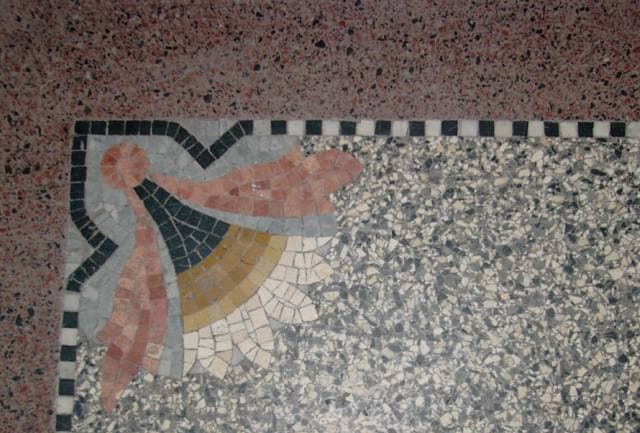
Photograph: Traditional terrazzo floor with marble chips. by Koppi2. Source on Wikimedia Commons, licensed CC BY-SA 3.0. See all image credits.

There is a quiet-floor club in Australian interiors: terrazzo, stone, and the various greys that wish they were concrete. They photograph as calm. They are not the same product, the same maintenance, or the same honesty about joints.
This essay is for people choosing among those looks rather than among timbers. If you still want boards, the timber hub is next door. If you want the actual grind of a slab, stay here.
Real terrazzo, and the porcelain that stole its outfit
Traditional terrazzo is chips of marble or other aggregate in a cement or resin binder, ground and polished into a speckled field. It can be poured on site or laid as tiles. The joy is the depth of the chips and the way a repair can be ground back into the field. The cost is a specialist installer, weight, and a surface that still needs a sensible slip conversation when wet.
Terrazzo-look porcelain is a photograph of that idea, sometimes a very good one, fired into a tile you can buy in 600 mm and lay with a grout joint. You get the speckle without the pour. You also get a joint grid, a different repair (replace a tile), and a slip rating that depends on whether the surface is polished or structured — all the usual porcelain rules.
Neither is wrong. Calling the porcelain “terrazzo” in a specification is wrong. It confuses the maintenance manual.
Stone: limestone, marble, sandstone, granite
Natural stone on Australian floors is a climate decision. Soft limestones mark. Marbles etch with lemon. Sandstones vary from tough to sponge. Granites can be tanks with a morgue energy if you pick the wrong polish.
Stone wants sealing in kitchens and entries, a mat strategy, and an acceptance of patina. If you want year-five to look like day-one, you want porcelain or a harder stone with a honed finish, not a pale limestone in a family kitchen. For wet areas, stone is possible and slippery unless you choose the right finish; it does not replace the membrane in bathroom assemblies.
Sintered stone and large ceramic slabs occupy the “stone look, different body” shelf. They can be superb. They are still large-format products with lippage and layout issues.
Concrete: the slab, the overlay, the lookalike
Polished or honed concrete is the honest version of the grey floor: it is the structure, ground until the aggregate shows. Our polished concrete photographs are the real thing, with the patches and the story. It can be beautiful in warehouses and in houses that want the slab to participate. It is cold, hard, and unforgiving of services you later wish you had under a void. Crack control joints will be part of the drawing whether you like them or not.
Microcement and toppings are thin overlays. They can run up a plinth and into a bathroom, as in our bathroom cover, if the system is trained and warranted. They are not a cheap way to hide a bad slab. They telegraph.
Concrete-look porcelain is, again, a picture. A very useful picture: warmer under a rug, replaceable, with a slip rating you can specify for an ensuite. It will never have the depth of a ground slab. Stop asking it to.
Which quiet floor for which room
- Living in a warehouse conversion: real grind if the slab is worth it; otherwise a large honed porcelain you can live with.
- Family kitchen: honed or structured porcelain, or a sealed darker stone you accept will mark. See kitchen flooring.
- Ensuite: structured porcelain or a specialist seamless system, not a polished marble because a hotel did it.
- Alfresco: external-rated structured porcelain or a known outdoor stone — alfresco tiling.
- Heritage hall: real terrazzo if it is already there and restorable; a lookalike if you are inventing a past.
Maintenance is the personality
Real terrazzo and stone develop a life. Porcelain resets when you mop. Concrete will show every chair tick unless you accept it as drawing. Choose the ageing curve, not only the sample.
Floorscapes will keep using the real nouns. If a guest writer wants to file a terrazzo restoration note, the write for us page sets the terms — including sponsored links if a supplier is paying for the mention.
Restoration, overlays and the existing Australian terrazzo
Plenty of post-war Australian houses and shops still have real terrazzo hiding under vinyl. Restoring it — grind, repair chips, reseal — can be cheaper and better than a porcelain photograph of itself. It can also reveal a colour you did not romanticise. Test a corner. If the binder is shot or the services you need would destroy the field, an overlay or a lookalike is mercy.
Concrete overlays on bad slabs are where people get hurt financially. A thin microcement over movement cracks without a designed joint will telegraph a map of the house. Crack isolation membranes exist; they are not magic. Sometimes a floating floor or a properly levelling compound plus porcelain is the calmer path.
Stone in entries takes sand. Coastal and red-dirt geographies will grind a soft limestone. If you want stone at the front door, pick a harder one, a honed finish, and a mat well. Save the pale marble for a powder room that does not see the beach.
Resale is a dull but real factor. A ground slab in a warehouse conversion is a feature. A badly patched overlay in a brick veneer is a deduction. A good porcelain stone-look is quiet and easy to live with, which is why it sells. Choose whether you are making an architectural floor or a calm one. Both are honourable. Mixing the language — calling a $70 tile “terrazzo” in the listing — is not.
Acoustics, warmth and the quiet-floor trade
Real stone and concrete are loud and cold compared with timber and hybrid. Rugs are part of the specification if you live there, not an apology. Porcelain lookalikes are slightly kinder but still a hard floor. If you want the quiet look and a quiet life, you may still want a pad under something else in the bedrooms. Mix rooms without mixing nouns. Call the porcelain porcelain.
People also ask
- Is terrazzo-look porcelain the same as terrazzo?
- No. Real terrazzo is a poured or tiled composite of chips in a binder that can be ground. Porcelain is a printed or through-body ceramic that looks like terrazzo. One is a system; the other is a picture of a system, with different joints, repair paths and slip behaviour.
- Is polished concrete cheaper than tiles?
- On an existing slab that is worth exposing, it can be. On a slab that needs patching, levelling and a proper grind, it can meet or beat a good porcelain once you add the days of disruption. It is not a free floor hiding under the carpet.
- Do stone floors need sealing?
- Most do. Limestone, marble and many sandstones are absorbent. Even some denser stones want a sealer in a kitchen. Porcelain generally does not absorb like stone, which is half the point of the lookalike.
Continue in the Tiles and stone hub or read the Floorscapes editorial standards. Pitch a related essay on the write for us page.